
CONDITIONS WE TREAT
Adderall Addiction Treatment in New Jersey
Still functioning does not mean there is no problem — Adderall addiction is real and treatable.
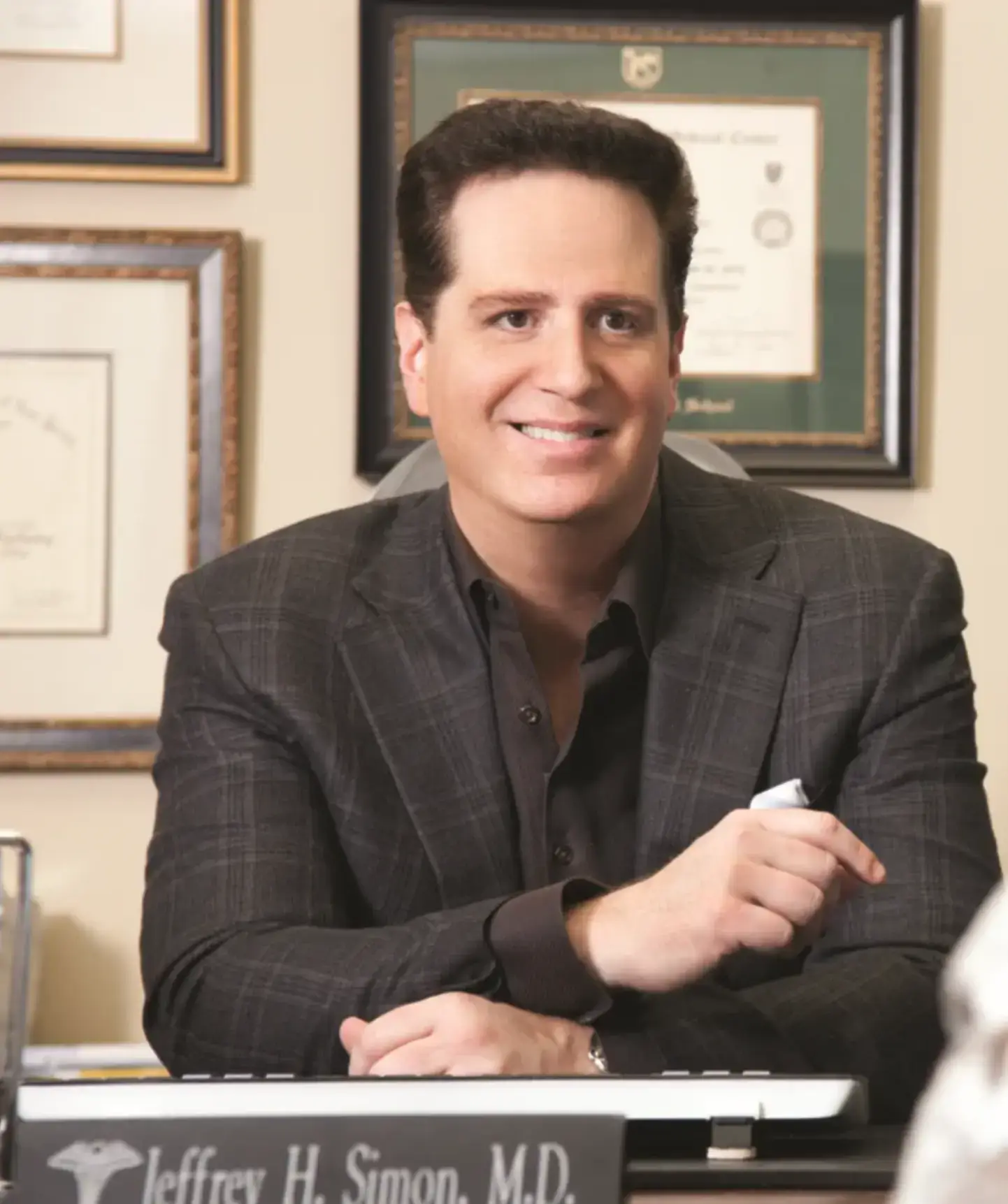 Medically reviewed by Dr. Jeffrey Simon, MD, Chief Medical Officer
Adderall: Quick Answers
Is Adderall a benzo?
No. Adderall is a stimulant (amphetamine salts), while benzodiazepines like Xanax and Valium are sedatives. They work in opposite directions — Adderall speeds up the central nervous system, benzos slow it down. Both are controlled substances and both can lead to dependence. See our benzodiazepine treatment page if benzos are involved.
Is Adderall addictive?
Yes. It is a Schedule II controlled substance because of its dependence potential. Dependence can develop even at prescribed doses with regular use.
What does Adderall withdrawal feel like?
Usually crushing fatigue, low mood, heavy sleep, increased appetite, and difficulty concentrating for 1–2 weeks. Uncomfortable, but rarely medically dangerous on its own.
Do I need detox first?
Most people can start PHP or IOP directly. If alcohol, opioids, or benzos are also in the picture, we arrange detox coordination first.
What if I actually have ADHD?
Our psychiatric evaluation assesses ADHD and builds a plan to manage it — often with non-stimulant options — so you are not choosing between recovery and focus.
Still functioning does not mean there is no problem. Adderall addiction frequently affects high-achievers who do not recognize what is happening until the consequences become impossible to ignore.
Call Cherry Hill Recovery Center — 856-200-3127
Free. Confidential. No judgment.
Adderall Addiction in New Jersey
Adderall — a prescription stimulant medication containing amphetamine salts — is one of the most commonly prescribed medications in the United States for Attention Deficit Hyperactivity Disorder (ADHD). It is also one of the most widely misused. Adderall addiction in New Jersey and across the country disproportionately affects students seeking academic performance enhancement, professionals using it to manage demanding workloads, and individuals with undiagnosed or undertreated ADHD who find in Adderall a medication that finally makes them feel functional. At Cherry Hill Recovery Center, our medical and clinical team treats Adderall addiction with the clinical seriousness and non-judgmental compassion this population deserves.
How Adderall Addiction Develops
Adderall works by increasing the release and blocking the reuptake of dopamine and norepinephrine in the brain — producing increased focus, energy, confidence, and in higher doses, euphoria. With regular use, the brain adapts by reducing its natural production of these neurotransmitters and downregulating the receptors that respond to them. The result is tolerance — needing more Adderall to achieve the same effect — and dependence, where the person cannot concentrate, function, or feel motivated without the medication. This process can occur even at prescribed therapeutic doses with regular use, and accelerates significantly with misuse.
The High-Functioning Trap
One of the most dangerous aspects of Adderall addiction is that it often develops under a cover of productivity. Students get better grades. Professionals meet deadlines. Entrepreneurs build companies. The Adderall appears to be working — until it stops working without escalating doses, until the crashes become unmanageable, until sleep disappears, until anxiety becomes constant, until the person cannot function at all without the drug they once used to function better. By the time the consequences become undeniable, physical and psychological dependence is already firmly established.
Signs of Adderall Addiction
Signs of Adderall addiction include taking more than prescribed or obtaining Adderall outside of a prescription, feeling unable to work, study, or function without it, significant sleep disruption — staying awake for extended periods then crashing, increasing anxiety, irritability, and mood instability, appetite suppression leading to significant weight loss, using Adderall to manage emotional states beyond focus and productivity, cardiovascular symptoms including elevated heart rate and blood pressure, and repeated unsuccessful attempts to cut back or stop.
Who Develops Adderall Addiction — and Why It Is So Easy to Miss
Adderall addiction does not look like most people's picture of addiction. It develops quietly, often in high-achieving people with a lot to lose — which is exactly why it so often goes unaddressed until the consequences become serious.
Students and Academic Performers
College and graduate students represent the highest-risk demographic for non-prescribed Adderall use. The pressure to perform academically drives widespread use as a study aid — often beginning with occasional use that escalates to daily dependence. By graduation, many students cannot imagine studying, working, or thinking clearly without it.
Professionals and Entrepreneurs
High-pressure professional environments — law, finance, medicine, technology, and entrepreneurship — have seen significant increases in prescription stimulant misuse. The demands of long hours, constant performance pressure, and the normalization of stimulant use in these cultures create conditions for dependence to develop gradually and without obvious warning signs.
People With Undiagnosed ADHD
Many people with Adderall addiction have undiagnosed or undertreated ADHD. Adderall works for them in a way it does not work for neurotypical users — it genuinely improves their functioning. But without proper diagnosis and management, the dose escalates, dependence develops, and the line between therapeutic use and addiction becomes blurred. Our clinical team evaluates every patient for ADHD as part of the initial assessment.
"I Still Function Fine — Do I Really Have a Problem?"
This is the most common question our admissions team hears from people with Adderall addiction. If you need Adderall to function at all — if stopping leaves you unable to concentrate, work, or feel motivated — that is dependence. If you have tried to stop and cannot — that is addiction. Functioning is not the same as being well. Call 856-200-3127 for a free honest assessment.
Call 856-200-3127 →Adderall Addiction Treatment Programs at Cherry Hill Recovery Center
Evidence-based PHP and IOP programs that address the psychological, behavioral, and psychiatric dimensions of Adderall addiction — including proper assessment and management of co-occurring ADHD and mental health conditions.
Partial Hospitalization Program (PHP)
PHP provides five to six days per week of intensive clinical care — individual therapy, group counseling, psychiatric evaluation, and medication management. For patients with significant Adderall dependence, co-occurring psychiatric conditions, or polysubstance use, PHP's daily structure and clinical intensity provides the strongest foundation for early recovery.
Learn About PHP →Intensive Outpatient Program (IOP)
IOP delivers structured addiction treatment three to four days per week — allowing patients to maintain work, school, and daily responsibilities. For many Adderall patients — particularly students and professionals — IOP is the ideal level of care. Morning, evening, and virtual options available.
Learn About IOP →Dual-Diagnosis Psychiatric Care
ADHD, anxiety, depression, and bipolar disorder are all strongly associated with Adderall addiction. Our clinical team evaluates every patient for these conditions and develops an integrated treatment plan that addresses both the addiction and any underlying psychiatric conditions from the first day of programming.
Learn About Psychiatric Care →Do I Need Detox First?
Most patients with Adderall addiction can begin PHP or IOP directly without medical detox. Stimulant withdrawal is uncomfortable but not typically medically dangerous. For patients who also use alcohol, opioids, or benzodiazepines, our clinical team assesses whether detox referral is needed before treatment begins.
Adderall Addiction and ADHD — A Complex Clinical Relationship
The relationship between Adderall addiction and ADHD is one of the most clinically complex in addiction medicine. People with genuine ADHD often respond to Adderall very differently than neurotypical individuals — experiencing improved focus and calm rather than a high. This can make it genuinely difficult to distinguish therapeutic benefit from developing dependence, and creates a clinical situation where stopping the medication feels impossible not just because of addiction but because of the return of unmanaged ADHD symptoms.
At Cherry Hill Recovery Center, our clinical team takes this complexity seriously. Every patient entering our PHP or IOP program receives a comprehensive psychiatric evaluation that specifically assesses for ADHD — including whether an existing diagnosis was accurate, whether the current medication and dose are appropriate, and whether non-stimulant ADHD management options should be explored as part of the treatment plan. We do not simply tell people with ADHD to stop their medication and figure it out. We develop a clinical approach that treats the addiction while addressing the underlying neurodevelopmental reality.
For some patients, the path forward involves transitioning from Adderall to non-stimulant ADHD medications — such as Strattera, Wellbutrin, or Intuniv — that manage ADHD without producing the same dependence potential. For others, the right approach involves behavioral strategies, therapy, and environmental modifications alongside or instead of medication. Every decision is made collaboratively between our clinical team and the patient.
ADHD and Adderall — What Our Assessment Covers
- Comprehensive psychiatric evaluation for ADHD
- Review of existing diagnosis and prescription history
- Assessment of current medication dose and pattern
- Exploration of non-stimulant ADHD management options
- Collaborative treatment planning involving the patient throughout
- Coordination with existing prescribers when appropriate
Questions about ADHD and Adderall addiction?
Call 856-200-3127 →What Does Adderall Withdrawal Feel Like?
Adderall withdrawal is not medically dangerous in the way alcohol or benzodiazepine withdrawal is — but it is real, uncomfortable, and psychologically challenging. The crash that follows stopping Adderall is one of the most common reasons people cannot quit without clinical support.
The Crash
The immediate post-Adderall crash involves extreme fatigue, depression, increased appetite, mental fog, and an almost total absence of motivation or ability to concentrate. For people who have been using Adderall to function, this phase feels catastrophically disabling. It is the highest immediate relapse risk period and the most important time to have structured clinical support.
Extended Withdrawal
Ongoing fatigue, mood dysregulation, difficulty concentrating, anxiety, irritability, and strong cravings for Adderall persist through the first two weeks. For patients with co-occurring ADHD, this phase is particularly difficult as unmanaged ADHD symptoms return. Daily clinical support through PHP is particularly valuable.
Post-Acute Phase
Mood instability, low motivation, difficulty experiencing pleasure (anhedonia), and intermittent Adderall cravings can persist for weeks to months as the brain's dopamine system gradually recalibrates. Ongoing IOP and psychiatric support — particularly for co-occurring ADHD and depression — provides critical clinical support through this extended phase.
The Productivity Withdrawal Is Real — and Temporary
Many patients fear that stopping Adderall means losing their ability to function professionally or academically forever. This is not the case. The brain's dopamine system recovers with time — and with proper treatment of any underlying ADHD, most patients find that they can function effectively without stimulants. Our clinical team will work with you through every stage of that recovery.
Adderall Addiction and Co-Occurring Mental Health
Adderall addiction rarely exists in isolation. The most common co-occurring conditions our clinical team sees alongside stimulant addiction include anxiety disorders — which Adderall initially appears to help but progressively worsens with long-term use — depression driven by dopamine depletion during withdrawal and extended use cycles, ADHD which may have driven the original use, bipolar disorder where stimulants can precipitate manic episodes and destabilize mood, and eating disorders as Adderall's appetite-suppressing effects are sometimes deliberately misused for weight control.
Our clinical team conducts a comprehensive psychiatric evaluation for every patient entering our PHP and IOP programs, screening for all of these conditions and developing an integrated treatment plan that addresses both the addiction and the underlying psychiatric reality. When psychiatric medication management is clinically appropriate and agreed upon — including non-stimulant ADHD management — our medical team oversees that as an integrated component of the program.
Learn About Dual-Diagnosis Care →Anxiety Disorders
Adderall initially reduces anxiety for some users but progressively worsens anxiety with regular use. Our clinical team treats co-occurring anxiety alongside stimulant addiction simultaneously.
Depression & Anhedonia
Dopamine depletion from chronic Adderall use produces depression and inability to experience pleasure. Our dual-diagnosis approach addresses this as a core component of treatment.
ADHD
Adderall addiction and ADHD require integrated clinical management — not simply stopping medication. Our team evaluates and treats ADHD as a central component of the recovery plan.
Eating Disorders
Adderall misuse for appetite suppression and weight control overlaps significantly with eating disorder pathology. Our clinical team screens for this and addresses both conditions in treatment.
Evidence-Based Therapies for Adderall Addiction
Because Adderall addiction is primarily psychological, evidence-based behavioral therapies are the foundation of effective treatment. Our licensed clinical staff delivers these therapies within our PHP and IOP programs.
Cognitive Behavioral Therapy (CBT)
CBT helps patients identify the thoughts, beliefs, and situational triggers that drive Adderall use — particularly the achievement-focused thought patterns that are extremely common in students and professionals with stimulant addiction. CBT addresses the 'I cannot perform without it' belief system that is central to Adderall addiction.
Motivational Enhancement Therapy (MET)
Ambivalence about stopping Adderall is extremely common — particularly for patients who believe their productivity, career, or academic performance depends on it. MET helps patients clarify their own values and build intrinsic motivation for change beyond external pressure.
ADHD-Informed Behavioral Strategies
For patients with co-occurring ADHD, our clinical team works on evidence-based behavioral and environmental strategies for managing attention, organization, and executive function without stimulants — building skills that support both recovery and daily functioning.
Relapse Prevention & Performance Anxiety
The high-performance environments that drove Adderall use do not disappear when treatment ends. Our therapists work specifically on managing performance anxiety, building sustainable work and study habits, and developing a recovery plan that works in the real world the patient returns to.
Helping a Loved One With Adderall Addiction
Adderall addiction is particularly difficult for families to address because from the outside — and often from the inside — the person appears to be doing well. They may be getting good grades, excelling at work, and presenting as capable and productive. The signs of the problem are often invisible until the person crashes, or until someone pays close attention to the patterns beneath the surface.
Signs that a loved one's Adderall use has become a problem include significant sleep disruption — staying awake for days then sleeping for extended periods, noticeable weight loss or appetite suppression, escalating anxiety and irritability, marked personality changes, evidence of obtaining Adderall from non-prescription sources, and expressions of inability to function or perform without the medication.
For families of college students in particular — the normalization of stimulant use on campus can make it very difficult to have this conversation. Cherry Hill Recovery Center helps families understand what they are seeing and how to approach it. Contact our admissions team to talk through your specific situation before you have the conversation.
For Family Members
- High functioning does not mean there is no problem
- Watch for sleep disruption, weight loss, and anxiety
- Non-prescription sources are a serious warning sign
- Campus normalization does not make it safe
- Call us before having the conversation
Our Medical and Clinical Team
Adderall addiction treatment at Cherry Hill Recovery Center is delivered by a full team of licensed therapists, addiction counselors, and medical professionals — overseen by our Chief Medical Officer, board-certified psychiatrist Dr. Jeffrey Simon. Every patient receives a comprehensive psychiatric evaluation — including ADHD assessment — individualized treatment planning, and ongoing clinical oversight throughout their PHP or IOP program.
Dr. Jeffrey Simon, MD — Chief Medical Officer
Dr. Simon is a board-certified psychiatrist specializing in addiction medicine and co-occurring mental health disorders. He oversees clinical programming and the medical team at Cherry Hill Recovery Center, ensuring every patient receives evidence-based care. His approach to Adderall addiction recognizes the complex interplay between stimulant use disorder and ADHD — and treats both with the clinical precision and individual attention this population requires.
Meet Our Full Team →Does Insurance Cover Adderall Addiction Treatment in New Jersey?
Yes. Most major insurance plans are required to cover stimulant use disorder treatment under the Mental Health Parity and Addiction Equity Act — including Adderall addiction treatment through PHP and IOP. At Cherry Hill Recovery Center our admissions team verifies your specific coverage before treatment begins at no cost to you — so you have complete clarity on your benefits before anything starts.
Adderall Addiction Treatment Serving Cherry Hill & All of South Jersey
Cherry Hill Recovery Center serves patients with Adderall and stimulant addiction from throughout Camden County, Burlington County, Gloucester County, Atlantic County, and the greater South Jersey and Philadelphia region. Virtual IOP extends access to patients anywhere in New Jersey — particularly valuable for students and professionals who need flexible scheduling. We are located at 1930 Marlton Pike East in Cherry Hill, NJ.
Check If Your Insurance Covers This Program
Most HMO, PPO, and EPO plans cover PHP and IOP. Find out in 60 seconds — free and completely confidential.
Verify Insurance NowFrequently Asked Questions About Adderall Addiction Treatment in NJ
Still Functioning Is Not the Same as Being Well.
If Adderall is controlling your life — even if you appear fine from the outside — you deserve help. PHP, IOP, and ADHD-informed dual-diagnosis care from our board-certified medical and clinical team. Free, confidential, most insurance accepted.